Should Smoking be Banned Offshore?
Posted 09/12/2014 00:00
Last week Talisman banned E-Cigarettes from all their platforms in the North Sea leading to much debate on social media about smoking offshore with many calling for smoking to be banned completely.
With the introduction of the smoking ban in the UK in 2006 and the outlawing of smoking in the workplace now a general acceptance the question around smoking offshore is perhaps more complicated than it seems.
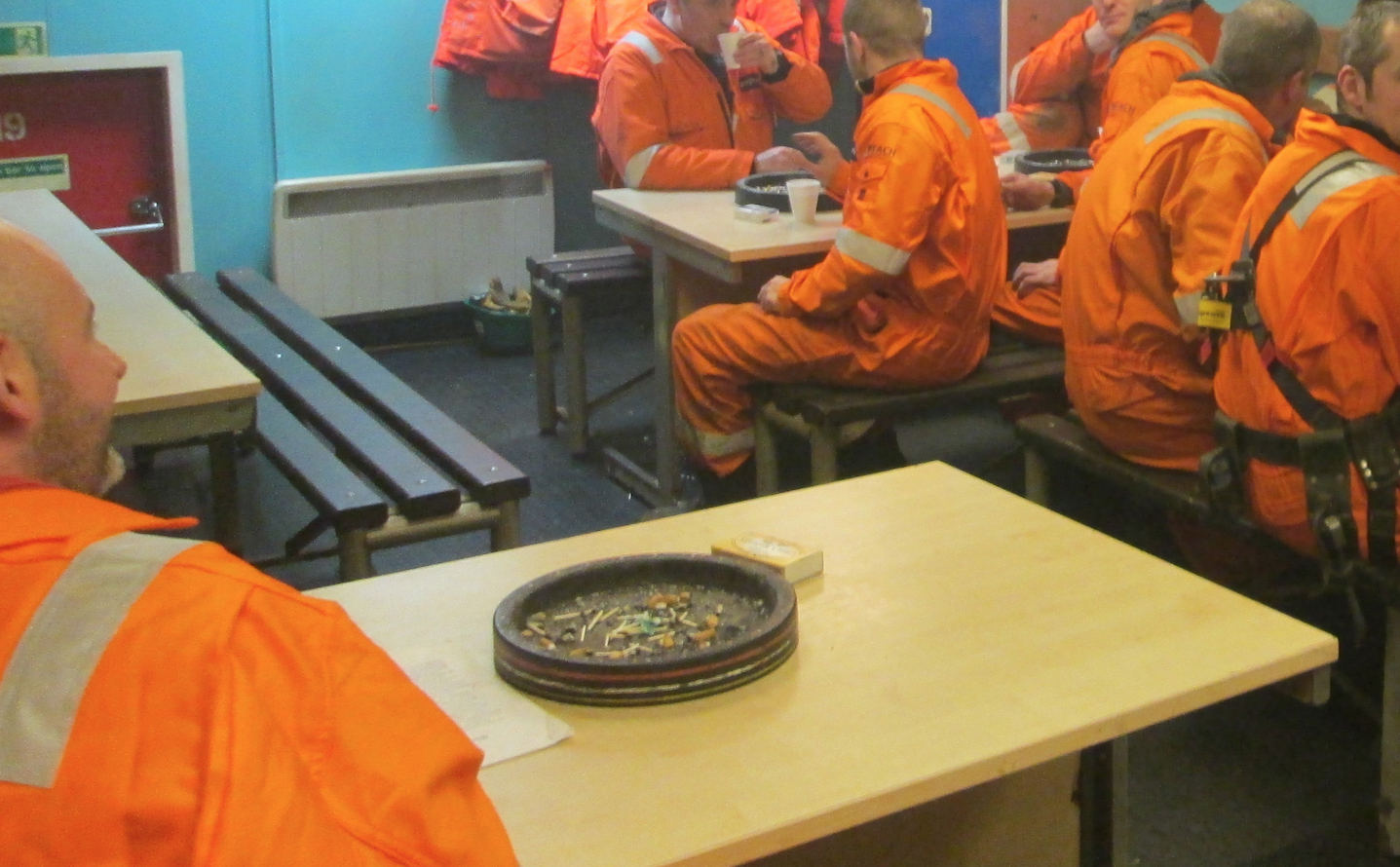
The general feeling from offshore workers who smoke is that being stuck offshore for 2 to 3 weeks at a time means they are entitled to their nicotine fix. Most smokers also highlight that they smoke in designated smoking shacks therefore it doesn't affect non-smokers. Non-smokers complain that most smoking shacks don't fully contain second hand smoke and that their smoking counterparts get more breaks as smoking is a valid excuse to leave the work front.
Legally there is no legislation that says employers have to provide facilities for smokers and indeed an employment tribunal ruling in 1992 (Dryden Vs Greater Glasgow Health Board) set a benchmark that confirmed employers have to make no provisions for smokers. So the question has to be - why are companies with such rigorous health and safety policies continuing to provide facilities that encourage and promote smoking offshore?
Oil and gas companies are quick to point out that the 2006 Health Act that prompted the smoking ban in the UK has exceptions, one of which has been interpreted to mean that the ban does not apply to Offshore. However there is plenty of other legislation that does apply. The Health and Safety at Work Etc Act 1974 and the Health, Safety and Welfare Regulations 1992 lay down requirements that employers must take all reasonably practicable steps to protect the health of employees. The old excuse of having no scientific evidence that smoking is harmful is out the window with research over the last 20 years confirming the dire effects of smoking and passive smoking on an individual’s health.
Employers also have a duty under the above mentioned legislation to protect employees from the effects of passive smoking. An Offshore Health and Safety expert who has chosen to remain anonymous, has pointed out that this duty of care also extends to smokers and that Offshore smoking shacks are often poorly designed and encourage smokers to congregate in large numbers for extended periods of time increasing their exposure to second hand smoke.
A spokesman for the HSE’s Energy Division said: “ Smoking in the workplace is dealt with as a public health matter within Great Britain. The Department of Health takes the lead on this in England and in Scotland it is the Scottish Government.
“However Regulation 12 of the Offshore Design and Construction Regulations states that employers should take appropriate measures for the protection of non-smokers against the discomfort caused by tobacco smoke.
“HSE can, in theory, take action against a dutyholder but verbal intervention - reminding people to close doors properly, seal leakage paths and balance/maintain HVAC systems - is usually sufficient.”
With live platforms unable to offer smokers the option of smoking outdoors and smoking shacks having to be contained spaces to comply with other HSE Guidance around air quality then the issue does seem to have few resolutions that will satisfy smokers.
Unite Regional Industrial Officer Tommy Campbell said, “I can’t recall an issue being raised by non-smoking offshore workers over colleagues who do smoke.
“However, instead of the big stick approach of an outright ban, offshore employers would be better leading initiatives that assist and support their employees to overcome nicotine addiction.
“Given the unique and challenging working environment of the offshore industry, that would be a more sensible and realistic approach.”
One possible solution is the use of e-cigarettes but it seems they pose other risks and it may be hard to overturn their recent ban from offshore platforms. Talisman cited an incident where an e-cigarette overheated while being charged as the reason for their ban but other issues would be around the habit smokers have of carrying their cigarettes around in their pocket as e-cigarettes are not intrinsically safe and could pose an explosion hazard if carried around in process and production areas.
When asked for comment, Oil & Gas UK advised that they are currently working on guidance for employers around nicotine use offshore.
Several other issues exist that should be included in any companies risk assessment when assessing the risks of allowing smoking offshore and Oil and Gas People is keen to hear how your company addresses these issues.
Please take our Smoking Survey below, it is private and confidential and covers questions such as:
Please leave comments and feedback below or contact our news desk on news@oilandgaspeople.com