Offshore Heavy Oil Economics
Posted 05/05/2015 00:00
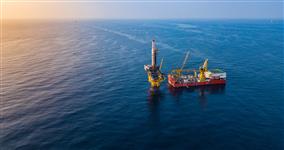
Even as onshore unconventional hydrocarbon developments fall victim to the downward spiral of oil and gas prices, offshore heavy oil developments continue to prove promising for significant group of exploration and production companies.
This is especially true for state-owned entities unconcerned with sustainable revenues.
Although the cost of exploring and developing offshore heavy oil is high due to the difficulty of producing, transporting and refining heavy oil, major international energy companies continue to develop heavy oil fields in an effort to replace reserves.
For example, despite the current crude price drop, China continues to develop its heavy oil reserves because its state-owned companies are not particularly concerned with profits, unlike their peer publically held companies. Heavy oil, typically defined as <22° gravity API, represents a valuable resource, but defining the potential proves to be problematic as total-resource reports vary greatly.
According to Chevron, heavy oil comprises about 50% of known oil resources but represents just one in 10 bbl of production.
New global investment to develop this 8 trillion bbl resource could double production output by 2025, reports the company.
According to estimates by London-based Visiongain, a business-intelligence provider and trading partner with the US Federal Government, on average up to 20% of the world’s remaining oil could be sourced from onshore and offshore heavy oil deposits.
The company predicts that the global market could reach more than US$50 billion this year, with production reaching more than 6 MMb/d. The majority of the billion-dollar price tags will be spent for cold heavy oil projects because many of the world’s largest heavy oil markets have well-established cold heavy oil projects, states the company.“As reserves of lighter crude oils dwindle and the rate of new discoveries decreases, oil and gas companies are increasingly looking to alternative hydrocarbon sources to plug the gap,” reports Robin Ray, energy analyst for VisionGain. “Heavy oil is one of those sources.”Such heavy oil plays offer significant growth and investment opportunities as international companies join to form partnerships for development. In the long run, as commodity prices recover, energy demand grows and major conventional oil discoveries become increasingly rare, the economics of heavy oil should steadily improve.
Today, more than 30 countries are known to possess recoverable heavy oil reserves, according to Halliburton. “Led by Canada and Venezuela (Canada’s heavy oil deposits rank second only to Saudi Arabia in total oil reserves, active heavy oil-producing countries also include the US (California), Mexico, Brazil, Russia, Indonesia, China, Colombia, Ecuador, Iraq, Kuwait, Saudi Arabia, Chad and Angola,” reports the company.
For now, many of the major exploration and production companies are continuing to eke out profits as they work offshore heavy oil exploration and developments.
Source: www.offshoreenergytoday.com
Please leave comments and feedback below